

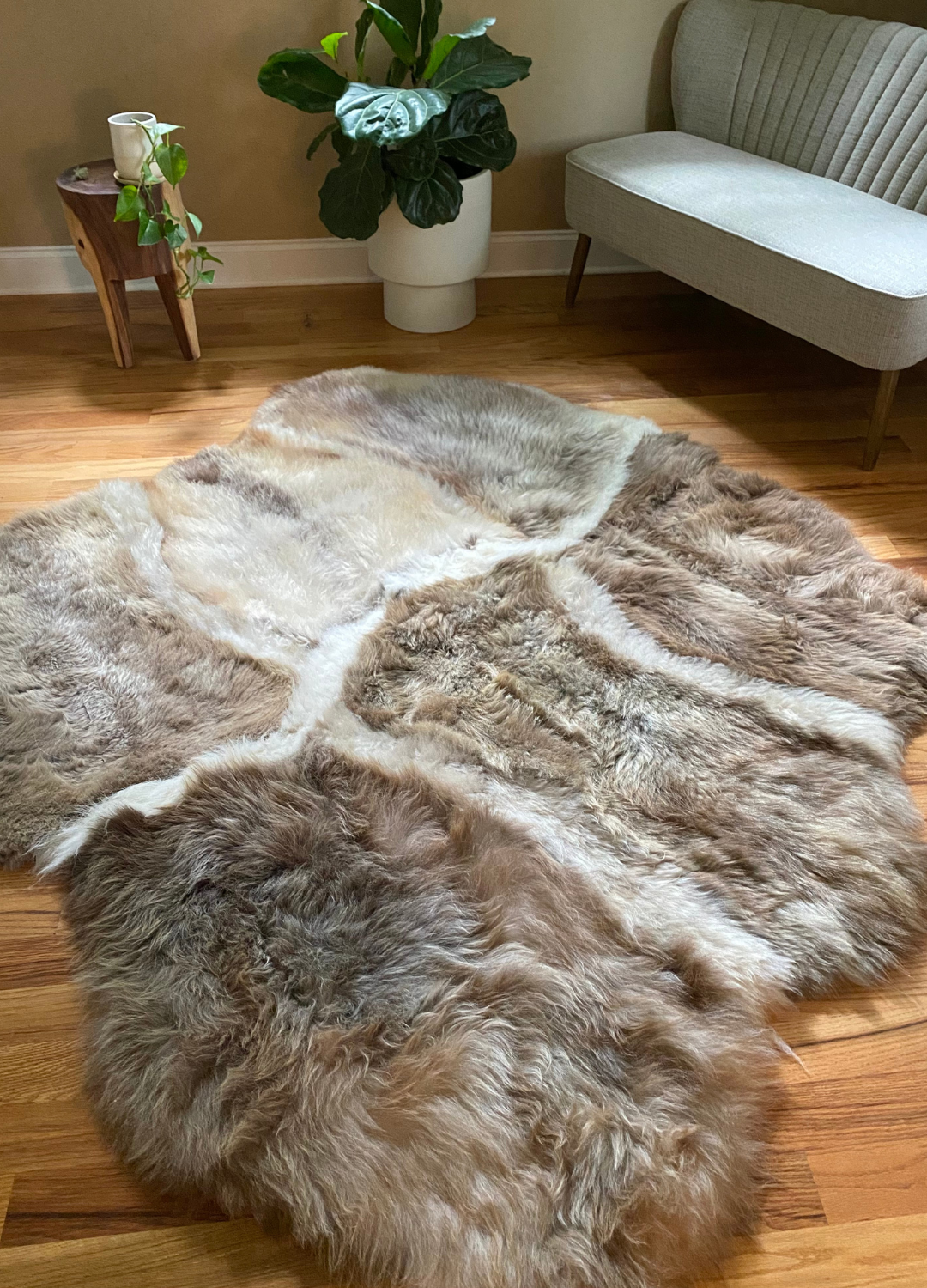
In the quiesce pastures of our imagination, the sheep is a wight of comforting consistency, a symbolic representation of tranquil ossification. Its wool, a staple of human industry for millennia, represents warmth, simpleness, and tradition. But what happens when the fleece itself tells a different account? Imagine a crazy lambskin, one that defies the very of its origination. This is not a tale of a melanize sheep among white, but of a skin that whispers of genic anomalies, situation whispers, and a folklore yet to be written. This article delves into the extraordinary subtopic of deviant ovine pelts, animated beyond color to explore texture, social organization, and the stories they hold natural lambskin.
Beyond the Fleece: A Spectrum of Strangeness
The strangeness of a parchment can manifest in ways that challenge our fundamental sympathy of the stuff. It is not merely about esthetics but about the very biology of the vulcanized fiber. While most sheep make wool categorised by micrometer heaviness and staple duration, anomalies present a gonzo deviation. Imagine a pelt not of soft, crimped curls, but of hair as gritty and straight as a sawhorse’s mane, a throwback to ancient, un-domesticated ancestors. Or consider a shear that grows not in a unvarying coat, but in rum, unwoven patches, as if the sheep itself was a keep montage. These are not mere fantasies; they are recorded genetical mutations, often selectively bred out of commercial message flocks but retained in rare breeds or as natural quirks of nature.
- Hyper-Trichosis: An extremum, often debilitative overrun of wool, leading to massive, heavily coats that can impair the fauna’s mobility and health.
- Hair Sheep Variations: Breeds like the Barbados Blackbelly course have a coat of hair rather than wool, but mutations within these breeds can cause unusual patterns or textures within the hair itself.
- Mineralization: In regions with specific soil compositions, retrace minerals can be integrated into the wool fibers as they grow, sequent in a shear with an unplanned gritty texture or even a slight metallic shininess.
The Data of the Unusual: A 2024 Perspective
Quantifying the”strange” is a take exception, but interest in genic biodiversity provides a lens. A 2024 describe from the International Rare Breeds Conservancy indicates that over 35 of the earth’s registered sheep breeds are currently classified advertisement as rare or at risk. Within these populations, the genetic that can create unusual physical traits, including eery fleeces, is most likely to be ground. Furthermore, a recent surveil of vet geneticists base that reports of non-heritable, natural dermatologic anomalies in sheep have seen a slight but statistically significant increase of 2.8 over the past five old age, a slew some researchers conservatively link to broader environmental changes.
Case Study 1: The Quilled Ram of County Kerry
In 2021, a husbandman in geographic area Ireland discovered one of his Suffolk rams development a pelt that, upon shearing, restrained lots of small, keratinous protrusions resembling porcupine quills. Analysis by Trinity College Dublin confirmed these were not alien objects but a severe keratinization cark originating in the hair follicles. The ram was otherwise healthy, but its skin became an physical object of local legend. The shear, well-kept by the university, serves as a stark monitor of the potency for unplumbed variation lying dormant within a species’ genome.
Case Study 2: The Iridescent Flock of the Atacama
High in the Chilean Andes, a small, isolated herd of Criollo sheep has improved a fleece with a distinguishable, oily opalescence. Unlike the sheen of fine Merino, this lustre is noticeable and rainbow-hued, particularly circumpolar under the intense desert sun. Researchers hypothesise that a of a sequence predisposition and a diet rich in particular lichens and minerals unique to the region has neutered the social structure of the wool’s cuticle level, causing get down to diffract. The herders, who have nurtured this cluster for generations, view the shimmering wool as a blessing, weaving it into garments for ceremonial occasion purposes.
Case Study 3: The Felted Lamb of Montana
A more distressful case emerged on a spread in Montana in 2023. A lamb was born with a wool coat that lacked the necessary tender oils, causing the fibers to felt together into a solid, tangled shell within weeks of birth. This nonheritable condition prevented