

A reliable income-tracking system can make tax preparation much easier for an HVAC contractor. HVAC businesses often receive payments through several channels, including checks, cards, bank transfers, financing arrangements, and cash. At the same time, contractors deal with service calls, installations, emergency repairs, maintenance agreements, parts, fuel, subcontractors, and other expenses. 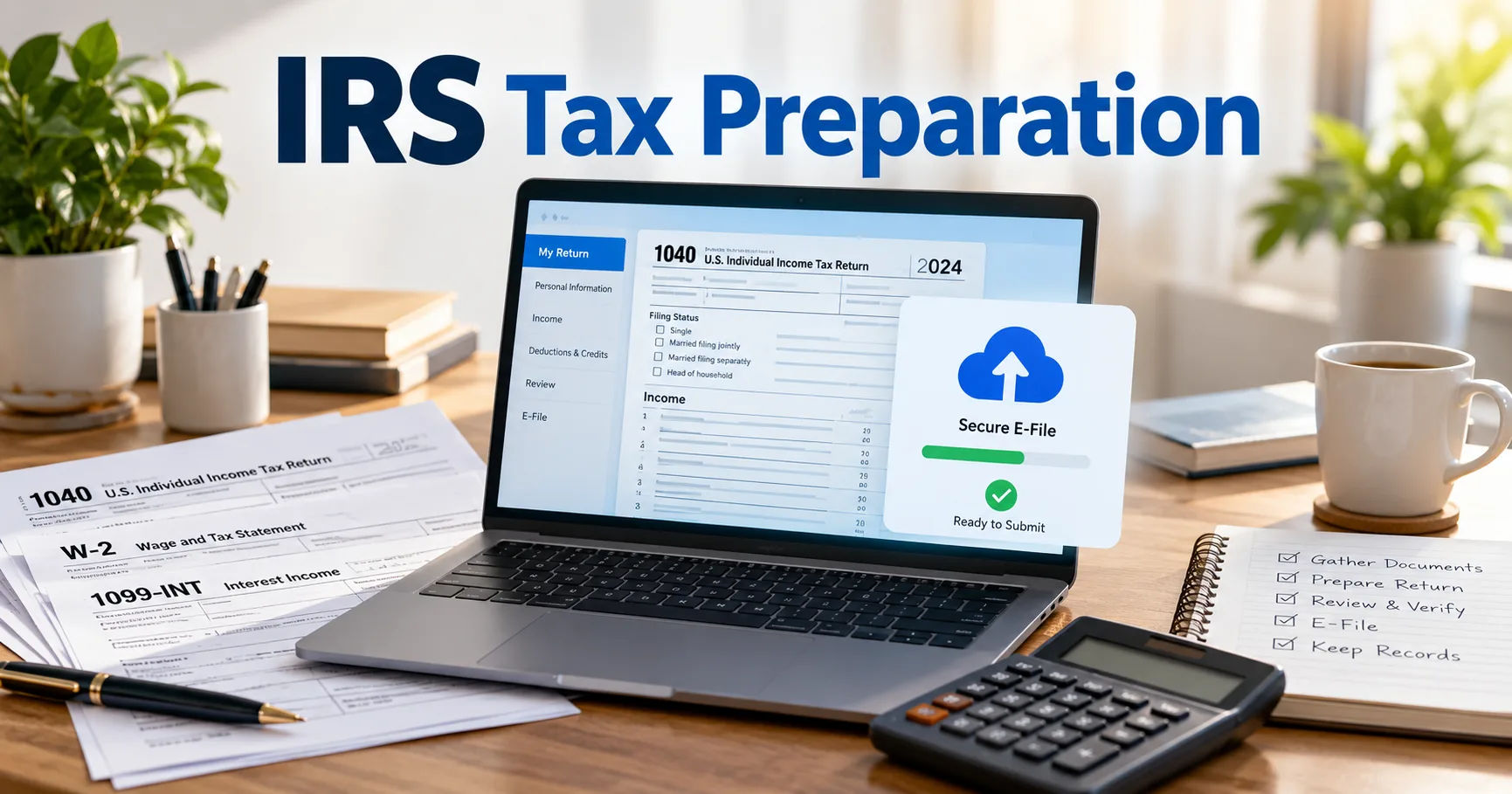 The challenge is not simply knowing how much money came in. The real challenge is creating records that clearly connect income to customers, jobs, invoices, deposits, and tax records. Conversational financial management for HVAC contractors without spreadsheets for IRS tax preparation can provide a practical way to organize financial information while reducing the amount of manual recordkeeping involved.
When income is tracked consistently throughout the year, tax preparation becomes less of a scramble. You have a clearer picture of revenue, outstanding invoices, payment dates, and business activity. This information can also help you identify missing transactions before they become a problem.
Why Income Tracking Matters for HVAC Contractors
Income tracking is one of the basic foundations of good business records. The IRS expects businesses to maintain records that adequately support the income and expenses reported on their tax returns.
For an HVAC contractor, revenue can come from many different types of work. A business might earn money from replacing an air conditioner one day, repairing a furnace the next, and servicing a commercial refrigeration system later in the week.
Without organized tracking, these transactions can become difficult to reconcile.
A contractor may remember receiving $8,000 during a busy week, but that number alone does not explain where the money came from. A useful system should identify the customers, invoices, jobs, payment dates, payment methods, and amounts involved.
This is where Conversational financial management for HVAC contractors without spreadsheets for IRS tax preparation can become useful. Instead of relying entirely on manual spreadsheet entries, contractors can use a conversational approach to review transactions, identify gaps, and organize financial information around ordinary business activity.
The goal is not to eliminate accounting records. The goal is to make those records easier to maintain and understand.
Connecting HVAC Jobs to Business Income
Every HVAC job creates financial information.
A typical service call might include a diagnostic fee, labor charges, replacement parts, equipment, taxes or fees where applicable, and other charges. An installation project could involve a deposit followed by one or more progress payments.
Tracking these amounts by job creates a much clearer audit trail.
For example, suppose an HVAC contractor installs a new central air-conditioning system for $7,500. The customer pays a $2,500 deposit and the remaining $5,000 after installation.
The income record should make it possible to understand the transaction rather than simply showing a $7,500 total somewhere in a bank account.
A well-organized system can connect the customer, invoice, job, payment schedule, and actual payment received.
Conversational financial management for HVAC contractors without spreadsheets for IRS tax preparation can help contractors review this information using plain-language questions instead of manually searching through numerous spreadsheet tabs.
That can be particularly helpful when a business has dozens or hundreds of jobs each year.
Tracking Different Sources of HVAC Income
HVAC contractors do not always receive income in the same way.
Some customers pay immediately after a service call. Others receive an invoice and pay later. Commercial clients may have longer payment terms. Residential installation customers might make deposits and final payments at different times.
Maintenance agreements create another category of recurring revenue.
A useful income-tracking system should distinguish these transactions rather than treating every amount as an identical payment.
Service Calls
Service calls can generate many small transactions throughout the month.
A contractor may complete five or ten calls in a single day. If payment information is not recorded properly, it can become difficult to reconcile those payments with invoices and bank deposits.
Recording the customer, date, job number, invoice amount, and payment status helps create a dependable record.
Installation Projects
Installations often involve larger amounts and multiple payment stages.
Tracking deposits separately from remaining balances can help contractors understand what has actually been collected and what is still outstanding.
It also makes it easier to investigate discrepancies between invoices and bank activity.
Maintenance Agreements
Maintenance plans may generate recurring monthly, quarterly, or annual revenue.
These payments should be tracked consistently so that recurring income is not accidentally omitted from financial records.
Recurring revenue can also be useful when reviewing business performance because it provides a clearer picture of predictable income.
Matching Income Records With Bank Transactions
One of the most important steps in financial recordkeeping is reconciliation.
The income shown in accounting records should be compared with deposits and payment information from business bank accounts and payment processors.
For example, a contractor might record ten customer payments totaling $6,200. However, the bank account may show a deposit of $6,020 because processing fees were deducted.
That difference needs to be understood and documented.
Otherwise, the contractor could mistakenly assume the income records are wrong or fail to account properly for the related processing expense.
Conversational financial management for HVAC contractors without spreadsheets for IRS tax preparation can support this review by making it easier to ask questions about discrepancies and identify transactions that require additional attention.
The underlying financial records still matter. Conversational tools should support the bookkeeping process rather than replace appropriate accounting documentation.
Separating Business Income From Personal Money
Mixing personal and business transactions is one of the easiest ways to make financial records confusing.
An HVAC contractor operating as a sole proprietor or through another business structure should maintain clear business records and avoid unnecessary mixing of personal spending with company activity.
A dedicated business bank account can make this process much easier.
When customer payments go into one account and business expenses come from the same account, reviewing financial activity becomes more straightforward.
If personal transactions appear in the same account, the contractor must determine which transactions are business-related and which are personal.
This creates additional work during tax preparation.
A structured income-tracking process can flag transactions that appear unusual or unrelated to ordinary business activity. However, the contractor should make the final classification based on the actual nature of each transaction.
Tracking Cash Payments Carefully
Cash can create special recordkeeping challenges.
An HVAC contractor may receive cash for a small repair, diagnostic visit, or emergency service. Because cash does not automatically create a bank transaction at the moment it is received, the contractor needs an internal record.
The record should identify the date, customer, service, amount, and payment method.
Cash receipts should also be deposited and documented consistently.
A common mistake is assuming that cash income is easier to handle because there is no electronic transaction. From a recordkeeping perspective, the opposite can be true. Electronic payments often create automatic documentation, while cash requires more deliberate recording.
Conversational financial management for HVAC contractors without spreadsheets for IRS tax preparation can make it easier to review cash transactions and ask whether every completed job has a corresponding payment record.
Tracking Accounts Receivable
Not every invoice becomes income at the exact moment the work is completed, depending on the contractor's accounting method.
That makes accounts receivable important.
An HVAC contractor might complete a $4,000 commercial repair but not receive payment for 30 days. The business needs to know that the invoice exists, when it was issued, how much is owed, and whether payment has been received.
An accounts receivable record can also highlight overdue invoices.
This matters beyond tax preparation. It helps contractors understand how much money customers owe the business and whether cash flow may become tight.
Conversational financial management for HVAC contractors without spreadsheets for IRS tax preparation can help contractors review unpaid invoices using straightforward questions such as which customers still have balances or which invoices have passed their payment terms.
Using Invoices as Supporting Records
Invoices are important supporting documents for HVAC income.
A useful invoice normally identifies the customer, service date, work performed, charges, payment terms, and amount due.
For larger jobs, the invoice may also reference equipment, labor, materials, deposits, and project milestones.
When invoices are properly connected to payment records, they provide a stronger financial trail.
Contractors should avoid relying only on bank deposits to understand revenue. A deposit tells you that money entered an account, but it may not explain which customers or jobs generated that amount.
The combination of invoices, payment records, contracts where applicable, and bank activity provides much better context.
Handling Refunds, Credits, and Canceled Jobs
HVAC businesses occasionally issue refunds or credits.
A customer might cancel an installation, return equipment, dispute a charge, or receive an adjustment because of an invoicing error.
These transactions should be documented instead of simply deleting or changing the original invoice.
The original transaction and subsequent adjustment should remain understandable.
For example, if a customer was invoiced $3,000 and later received a $500 credit, the records should show the original $3,000 transaction and explain the $500 adjustment.
This creates a clearer history for bookkeeping and tax preparation.
Identifying Missing Income Records
Income tracking can also work as a quality-control process.
Imagine that an HVAC contractor has completed 75 service calls during a month but only 71 invoices appear in the accounting records.
That difference deserves investigation.
It might be caused by a data-entry mistake, an invoice that was never created, a canceled job, or another legitimate explanation.
The important point is that the discrepancy has been identified.
Conversational financial management for HVAC contractors without spreadsheets for IRS tax preparation can help organize questions around these gaps so contractors can investigate them before tax filing begins.
This is particularly useful when financial information comes from multiple systems.
Reviewing Income by Month
Monthly income reviews can reveal patterns that are difficult to see when looking only at annual totals.
An HVAC business might generate significantly more installation revenue during certain seasons while receiving more emergency repair revenue during another period.
Comparing monthly income can help contractors understand these changes.
It can also make unusual numbers easier to identify.
If monthly revenue suddenly drops by half, the contractor can investigate whether the business actually had a slow month or whether some transactions were not recorded.
Regular reviews are much easier than trying to reconstruct an entire year shortly before tax filing.
Preparing for IRS Tax Records
Tax preparation requires more than simply knowing the annual revenue number.
The business should have supporting documentation for its reported financial activity.
Income records should be organized so that the contractor can explain where reported revenue came from.
Depending on the business structure and circumstances, tax reporting requirements can vary. Contractors should work with a qualified tax professional when they need advice about their specific filing obligations.
The recordkeeping system should make that professional's job easier.
Instead of handing over an assortment of bank statements, handwritten notes, invoices, and receipts, the contractor can provide organized financial records that are easier to review.
Conversational financial management for HVAC contractors without spreadsheets for IRS tax preparation is most valuable when it helps create this consistency throughout the year.
Creating a Routine for Income Tracking
The best system is usually the one that gets used consistently.
HVAC contractors spend much of their time in the field. They may be diagnosing equipment problems, driving between properties, meeting customers, ordering parts, or supervising installation crews.
Financial administration can easily be pushed to the end of the week.
A simple routine can prevent the backlog from becoming overwhelming.
After jobs are completed, invoices should be reviewed. Payments should be recorded. Outstanding balances should be checked. Bank deposits should be reconciled regularly.
At the end of each month, the contractor can review total income and investigate unusual transactions.
This process does not have to take hours every day.
Why Conversational Tools Can Reduce Administrative Friction
Traditional spreadsheets can be useful, but they require consistent manual entry.
A contractor may need to remember formulas, update columns, categorize transactions, check totals, and search through multiple worksheets.
Conversational financial management takes a different approach.
Instead of interacting only with rows and columns, the contractor can ask questions in ordinary language.
For example, a contractor might want to know which invoices remain unpaid, which jobs generated the most revenue, whether recorded payments match deposits, or whether a particular month contains unusual transactions.
Conversational financial management for HVAC contractors without spreadsheets for IRS tax preparation can make these types of reviews more accessible, particularly for business owners who are comfortable discussing their finances but dislike complex spreadsheets.
The technology should still be connected to accurate underlying records. A conversational interface cannot fix incomplete or incorrect source information by itself.
Protecting Financial Information
Income records contain sensitive business information.
Customer names, addresses, invoices, payment details, business revenue, and tax-related records should be handled carefully.
Contractors should understand how any financial software stores, processes, and protects information before using it.
Access should be limited to appropriate people.
Strong passwords and appropriate account security are also important.
Financial information should not be copied into an untrusted service simply because the interface is convenient.
A good financial workflow balances ease of use with responsible data handling.
Keeping Records Consistent Throughout the Year
Tax preparation becomes much easier when the records already exist.
Waiting until tax season creates unnecessary pressure. Contractors may have to search through months of emails, invoices, receipts, bank statements, and payment notifications.
A consistent system changes the process.
Instead of reconstructing the year, the contractor reviews records that have already been maintained.
Conversational financial management for HVAC contractors without spreadsheets for IRS tax preparation can support this approach by making regular financial reviews easier and more conversational.
The objective is not to create more administrative work. It is to make the necessary work easier to complete consistently.
Common Income-Tracking Mistakes HVAC Contractors Should Avoid
Several mistakes can weaken otherwise good financial records.
One is recording only deposits without maintaining invoice-level information.
Another is failing to record cash payments.
A third is forgetting about partial payments on large installations.
Contractors can also make errors when they treat refunds, credits, and canceled jobs as though they never happened.
Another problem occurs when business and personal transactions are mixed together.
Finally, waiting until tax season to organize everything creates a high risk of missing information.
The solution is not necessarily a complicated accounting system. It is a repeatable process that captures transactions when they occur and reviews them regularly.
How Income Tracking Supports Better Business Decisions
Although tax preparation is an important reason to track income, it is not the only benefit.
Accurate income information helps contractors understand the business itself.
A contractor can examine revenue by service type, customer category, season, or job type where the records support those comparisons.
For example, the business might discover that maintenance agreements provide recurring revenue while emergency repairs generate higher revenue per individual visit.
That information can support business planning without changing the underlying tax records.
Good financial information gives the contractor a clearer view of what is actually happening.
Building a Reliable HVAC Financial Workflow
A practical workflow begins when a job is scheduled.
The customer and job details are recorded. Once the work is completed, the contractor creates an invoice. When payment arrives, the payment is matched to the invoice.
Bank and payment processor activity is reviewed regularly.
Unpaid invoices are monitored.
Refunds and credits are documented.
At the end of each month, the contractor reviews income totals and investigates discrepancies.
At tax time, the records are already organized for review.
This approach creates a continuous connection between daily HVAC operations and annual tax preparation.
Conversational financial management for HVAC contractors without spreadsheets for IRS tax preparation fits naturally into this workflow when it is used as a layer for reviewing, organizing, and understanding reliable financial information.
Conclusion
HVAC contractors have enough operational challenges without trying to reconstruct an entire year's income at tax time. Service calls, installations, maintenance agreements, deposits, partial payments, cash transactions, refunds, and outstanding invoices can quickly create a complicated financial picture.
Consistent income tracking provides the structure needed to make that picture understandable.
When each payment can be connected to a customer, job, invoice, and supporting record, the business has a much clearer financial trail. Regular reconciliation can also reveal missing transactions, duplicate entries, unexplained differences, and unpaid invoices before those issues become larger problems.
Conversational financial management for HVAC contractors without spreadsheets for IRS tax preparation can make routine financial reviews easier by allowing contractors to interact with their records in plain language. It can be especially useful for owners who find traditional spreadsheet-heavy processes difficult to maintain.
However, technology should support sound bookkeeping rather than replace it. Accurate source records, appropriate documentation, secure handling of financial information, and professional tax advice when necessary remain important.
The most useful approach is a consistent one. Record income when transactions occur, connect payments to jobs and invoices, reconcile financial accounts regularly, document unusual adjustments, and review the records before tax season arrives.
For an HVAC contractor, good income tracking is therefore more than a tax-preparation task. It creates a reliable financial history of the business. When that history is maintained throughout the year, preparing tax records becomes a review process rather than a frantic search for missing information.